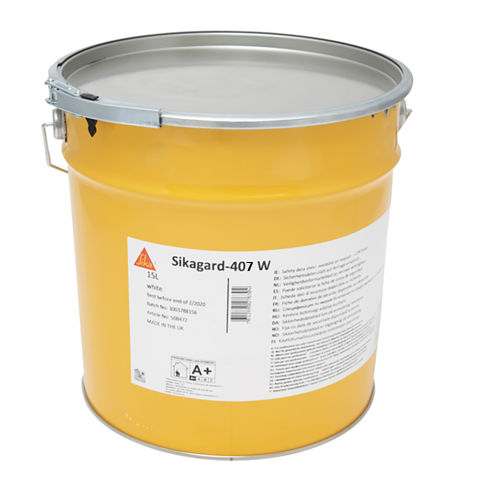
Sikagard-407 W, Glossy Pu-Acrylic Hybrid Coating for Walls/Ceilings, Exterior, White

SIKA
Sika is a global leader in specialty chemicals for the construction and industrial sectors. The company develops and supplies innovative products and systems for bonding, sealing, damping, reinforcing, and protecting structures. With a strong focus on sustainability and performance, Sika serves a wide range of applications including concrete production, waterproofing, roofing, flooring, and structural strengthening.
Read more| Single component, water-based, PU-acrylic hybrid resin coating for walls and ceilings with a gloss finish. Sikagard-407 W is a 1-part, water-based, modified acrylic resin coating. It contains an organic in-film preservative and provides a gloss finish.
| ||||||||||||||||||||||||||||||||||||||||||||||
UsageSikagard-407 W is used as a top coat or standalone coating for walls and ceilings Sikagard-407 W is used on:
Advantages
Packaging5 litres (6.35 kg) drums 15 litres (19.05 kg) drums ColourWhite | ||||||||||||||||||||||||||||||||||||||||||||||
Technical Information Tensile Strength
Tensile adhesion strength
Chemical Resistance Disinfection with hydrogen peroxide vapour: Resistant to Bioquell VHP systems. Good short-term resistance to mild acids, alkalis, cleaning agents and disinfectants. Please contact Sika Technical Services for specific information. | ||||||||||||||||||||||||||||||||||||||||||||||
Application Information Layer Thickness 120 µm Ambient Air Temperature
Relative Air Humidity
Dew Point Beware of condensation. The substrate and uncured applied product must be at least +3 °C above dew point to reduce the risk of condensation on the surface of the applied product. Substrate Temperature
Waiting Time / Overcoating Before applying Sikagard-407 W on Sikagard-407 W, allow:
Before applying Sikagard-407 W on Sikagard-403 W, allow:
Note: Times are approximate and will be affected by changing ambient conditions, particularly temperature and relative humidity. Applied Product Ready for Use
Note: Times are approximate and will be affected by changing ambient conditions, particularly temperature and relative humidity. |