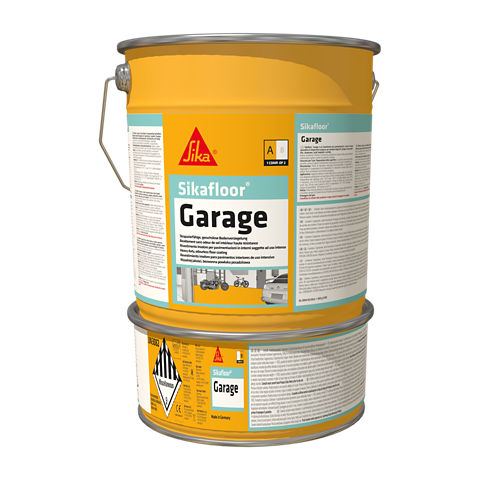
Sikafloor Garage, Water-Based Epoxy Paint, 6Kg

SIKA
Sika is a global leader in specialty chemicals for the construction and industrial sectors. The company develops and supplies innovative products and systems for bonding, sealing, damping, reinforcing, and protecting structures. With a strong focus on sustainability and performance, Sika serves a wide range of applications including concrete production, waterproofing, roofing, flooring, and structural strengthening.
Read moreTwo-component, water-based, low-emission epoxy coating Sikafloor® Garage is a two-component, water-based, colored epoxy floor covering that provides a continuous, glossy, smooth, chemically resistant and easy-to-maintain finish. For normal to medium wear conditions. Indoor and outdoor use. | ||||||||||||||||||||||||||||||||||||||||||||||
UseSikafloor® Garage is used as:
Sikafloor® Garage is recommended in:
Note:
Advantages
pack
Color
Exposure to direct sunlight Note: When the product is exposed to direct sunlight, discoloration and color variations may occur. This does not influence the functionality and performance of the cover. | ||||||||||||||||||||||||||||||||||||||||||||||
Typical technical data
| ||||||||||||||||||||||||||||||||||||||||||||||
ApplicationMixture ratio
Product temperature
Ambient air temperature
The relative humidity of the air
Dew point Beware of condensation! The temperature of the substrate and uncured material on the surface must be at least 3˚C higher than the dew point, to reduce the risk of condensation and delamination of the finished surface. Note: Conditions of low temperatures and high humidity increase the probability of surface delamination. Support temperature
Moisture content in the substrate
No rising moisture per ASTM D4263, (polyethylene sheet test). Lifetime of the mixture
Waiting Time / Recoating The waiting time, before applying products over Sikafloor® Garage, is:
Times are approximate and are affected by environmental changes, especially temperature and relative humidity. The applied product is usable after
Note: Times are approximate and are affected by changes in ambient conditions, especially temperature and relative humidity. Consumption 0.2 – 0.3 kg/m²/layer, applied with a roller. These values are theoretical and do not take into account additional consumption due to surface porosity, surface profile, unevenness or losses, etc. For detailed information, please refer to the Sikafloor® MultiDur WS-12 System Data Sheet. EQUIPMENT Select the most appropriate equipment needed for the project: SUPPORT PREPARATION EQUIPMENT ▪ Abrasive sandblasting system ▪ Milling machine ▪ Scarifying machine MIXING EQUIPMENT ▪ Double paddle electric mixer, ~700 W, 300–400 rpm APPLICATION EQUIPMENT ▪ Nylon rollers with short thread, 12 mm (0.472 in) shuffle
APPLICATION IMPORTANT Damaged finish due to heating with fossil fuel equipment Gas, oil or paraffin heating equipment produces large amounts of carbon dioxide and water vapor, which can adversely affect the finish. For temporary heating, use only electric warm air blowing systems. Do not use gas, oil, paraffin or other fossil fuel heating equipment. IMPORTANT Ventilation of closed spaces Always ensure good ventilation when applying the product in an enclosed space. IMPORTANT Surface gloss variation Uneven application thicknesses, substrate absorption and variations in temperature and humidity can cause gloss differences in the surface finish. PRIMER 1. Pour the mixed primer onto the prepared substrate and apply with a brush, roller or trowel. 2. Roll back in two directions perpendicular to each other. Note: Make sure the substrate is covered with a continuous, non-porous layer. If necessary, apply two coats of primer. 3. Confirm that the waiting or overcoating time has been reached before applying subsequent products. See individual primer data sheet. COVER LAYER 1. Apply the product to the prepared substrate using a short wire roller in two directions perpendicular to each other. Note: Maintain a "wet" edge during application to achieve a continuous finish. 2. Light colors such as yellow or orange may require multiple coats to achieve full opacity. SURFACE SEALING LAYER WITH SCATTERED AGGREGATE 1. Pour the mixed product onto the support. Note: For consumption, see Application Information section. 2. Spread the product evenly on the surface with a trowel. 3. Roll back the surface in two directions perpendicular to each other with a medium thread roller. Note: Maintain a "wet edge" during application to achieve a continuous finish. CLEANING OF TOOLS Clean all tools and application equipment with water immediately after use. The already hardened material can only be removed mechanically. |